
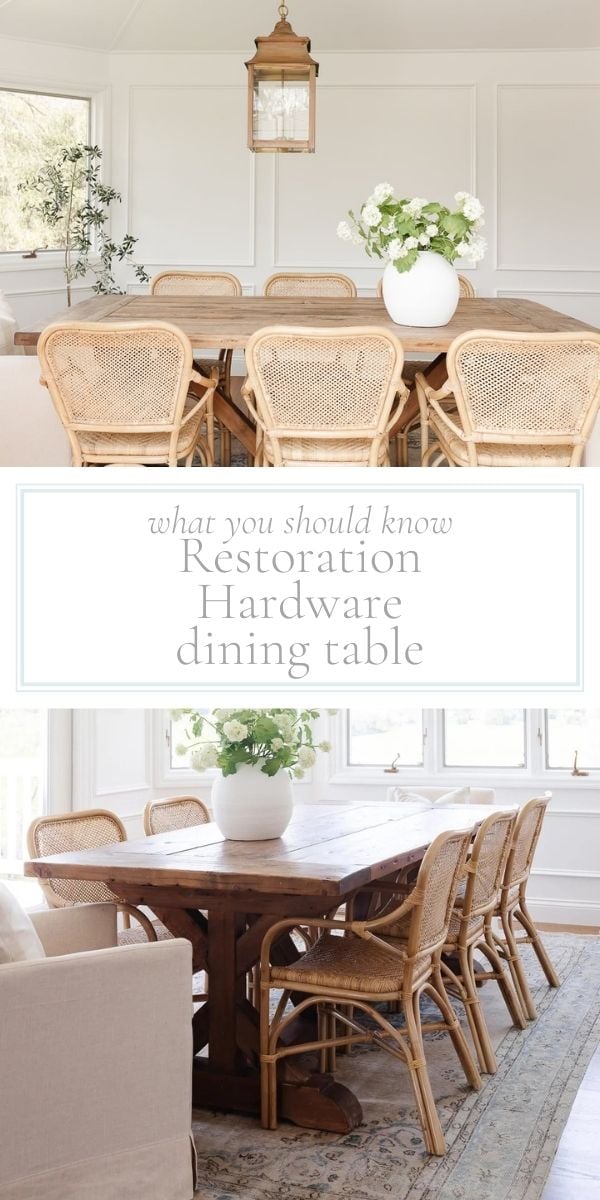
Get a real life review of a Restoration Hardware dining table! We’ll also show you how to protect your Restoration Hardware dining table, coffee table or desk.
Learn about all the options and what we ultimately went with and love seven + years later!
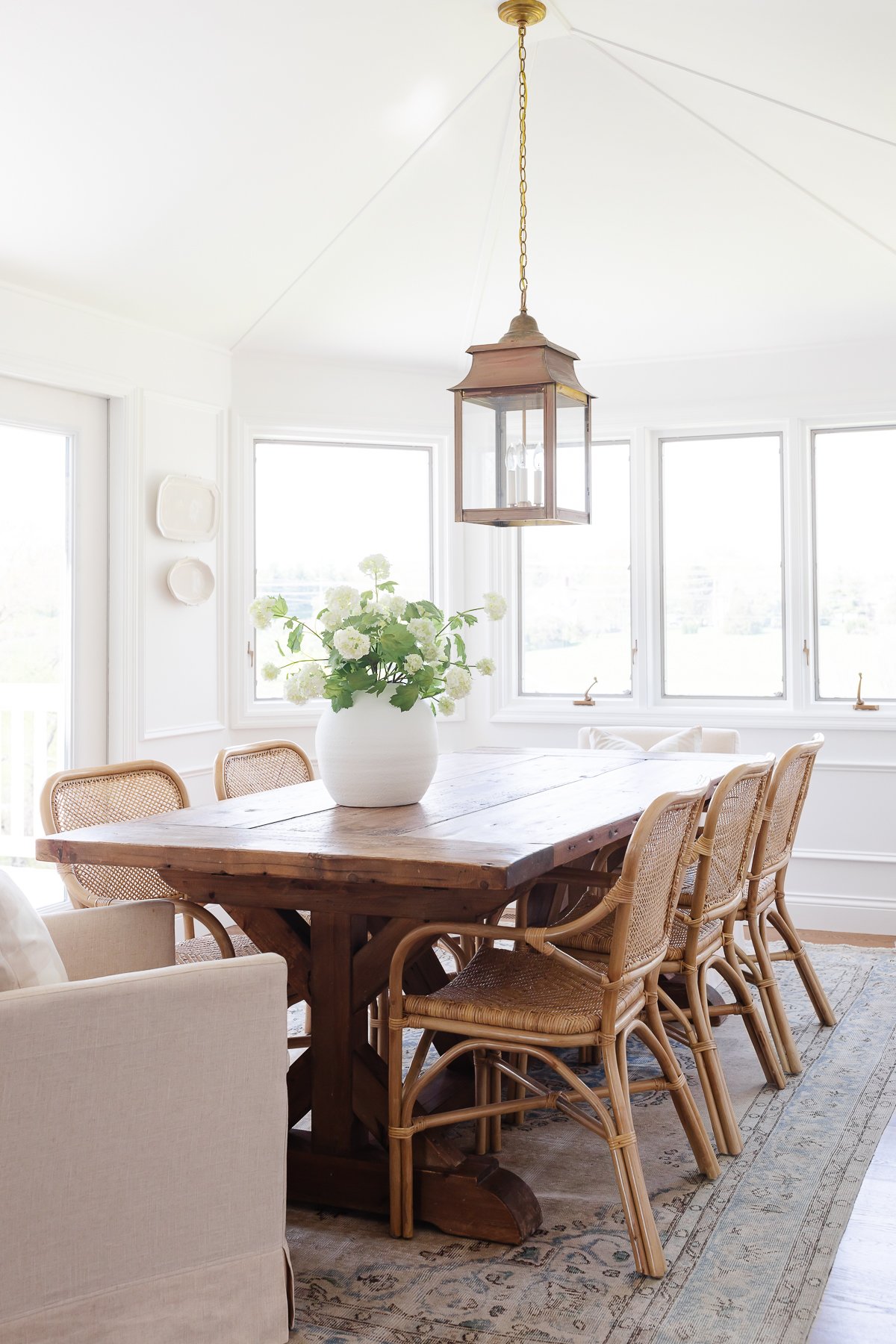
I haven’t written about our Restoration Hardware table since shortly after we received it because I allowed it to paralyze me. Things didn’t go as planned, to say the least, and this table caused us a lot of frustration.
The stress, disappointment and overwhelm was just too much. Instead, our family of five sat at an antique table, intended to be my kitchen desk.
It was tight. Our legs didn’t even fit underneath it. We just “closed off” the sunroom and pretended that it, along with the table, simply didn’t exist.
When we purchased a Restoration Hardware dining table with a natural finish, we envisioned it weathering over time. We wanted a rustic farmhouse table that would only become prettier over time – if you found your way here, you might have wanted the same thing.
Restoration Hardware Dining Table
The reality was different, however. The first time we wiped the table down after dinner with a damp cloth, we removed the finish. You can imagine the horror!
We quickly realized the “natural” finish is a beautiful powder that is simply not practical for day to day living. That soft, dusty look is unachievable in a maintainable form.
Underneath the powder the reclaimed wood table merely looked like wood purchased from your local hardware store.
We poured over the options time and time again, and realized that the perfect Restoration Hardware table just doesn’t exist. Fortunately, there are several options to protect your Restoration Hardware dining table. However, whatever product you use, will alter the finish.
We have purchased several pieces of Restoration Hardware’s natural finish including a dresser, chest of drawers and two dining room tables. We’ve had a lot of experience using the furniture over the last decade and most importantly, protecting it.
We made a lot of mistakes on our first Restoration Hardware dining table, but fortunately, you don’t have to! Today I’m sharing both how to protect and repair.
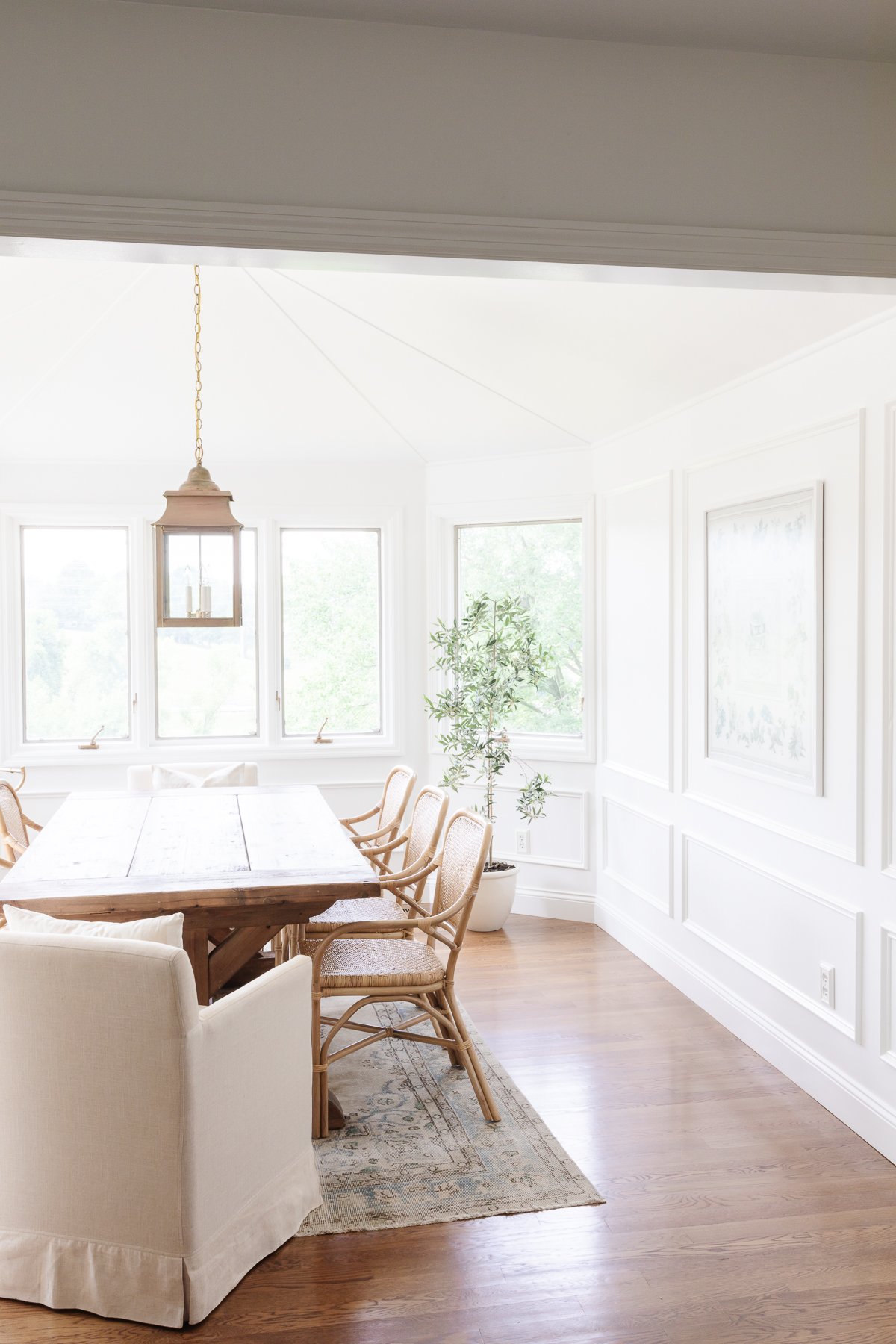
Read about How to Clean Linen Furniture from Restoration Hardware (or anywhere)!
RH Natural Finish
Restoration Hardware’s website notes on the description for the reclaimed wood table care recommendations.
“For dining tables, use of tablecloths, placemats and coasters is recommended to prevent staining. Clear furniture wax can be applied to protect the finish from minor spills. Use coasters or placemats to help prevent marks or stains.” and to “Wipe the table clean with a soft, dry cloth after each use.”
Their site also says “Care: Wipe using a damp cloth with mild soap and water, followed by a dry cloth. Wipe spills up immediately with a dry cloth.” However, that conflicts with their detailed care instructions. I (along with many of you) found that a damp cloth takes the finish right off.
After our first failure, we purchased a new RH dining table. We wanted to start fresh and fortunately were able to re-coop most of the expense we had invested in our previous farmhouse table.
We purchased this table with intention. This time we knew the powder finish would wipe off, so we took steps to protect it prior to use. Here is what we learned.
Products for Protection
- Wax
- Modern Masters Dead Flat
- Pure Tung Oil
- Polyurethane
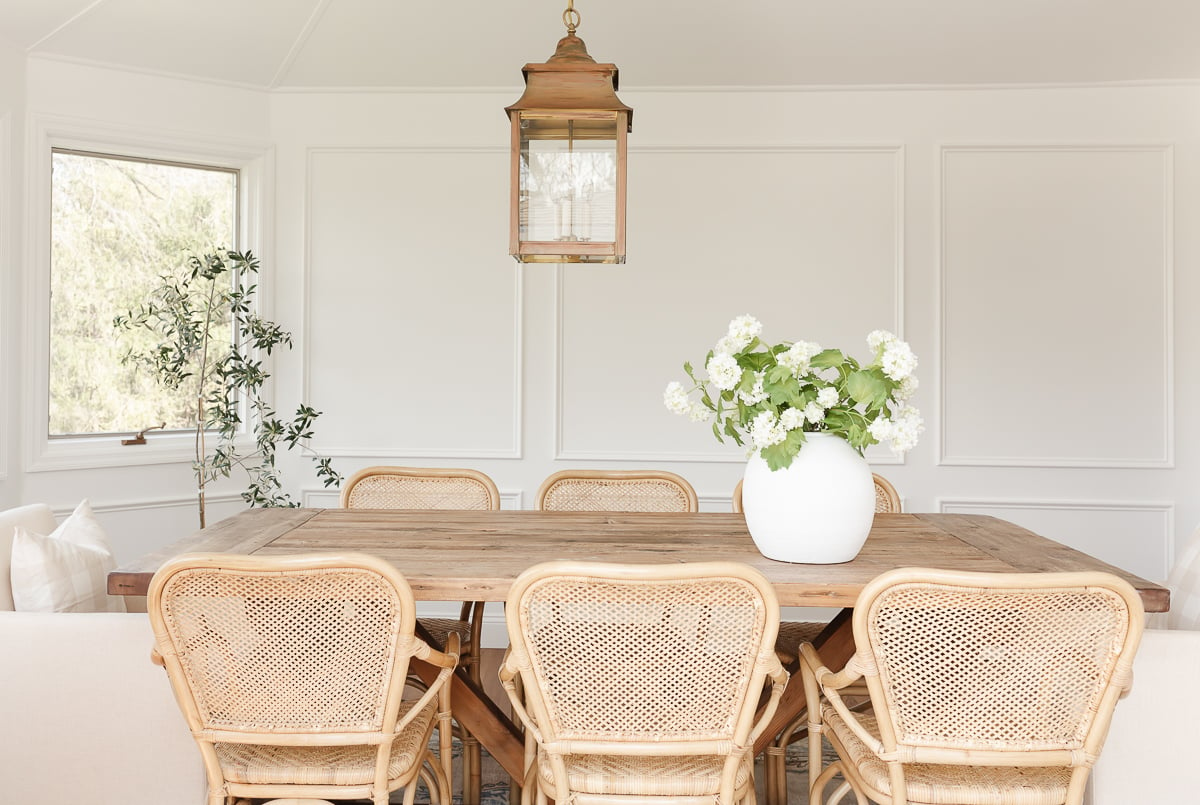
The Pros and Cons of Each Option
Wax
Pros:
- Recommended by Restoration Hardware
- Very little alteration to the table
- Minimal sheen
- Easy to apply
Cons:
- Minimal protection
- Minimally water resistant
- Removes with solvent
- Requires reapplication
- Heat leaves rings
Best Use: Limited wear pieces like the Restoration Hardware Coffee Table, Side Table or Dressers
Modern Masters Dead Flat
Pros:
- Minimal sheen
- Very little alteration to the table
- Easy to apply
Cons:
- Minimal protection (markers, etc don’t wipe off)
- Minimally water resistant
Best Use: Limited wear pieces like the Restoration Hardware Coffee Table, Side Table or Dressers
You can purchase Modern Masters Dead Flat Varnish here.
A reader, Paula, graciously sent a photo of her table sealed with this finish. We used it on our kitchen island you can learn more about it here and the protection it provides.
Polyurethane
Pros:
- Easy to apply
Cons:
- Even the matte finish has a sheen
- Not waterproof
- Doesn’t stand up to abrasion
Pure Tung Oil
This is the option we chose. See below for more details and a step by step tutorial.
Pros:
- Waterproof
- Marker, glue, etc wipe clean
- No need to reapply
Cons:
- Alters color
- Minimal alternation to sheen with proper application (use of steel wool)
- Slightly more difficult to apply
Best Use: High wear pieces like the Restoration Hardware Dining Table
You can purchase Pure Tung Oil here. Use TRUE Tung Oil. There’s a difference, as Tung Oil Finish is not 100% Tung Oil.
- It’s not supposed to alter the color of the wood. However, the first coat must be used with a combination of paint thinner, which alters the finish. It released red tones in the wood we finished. A week later I found it less noticeable.
- It has a matte finish. It can have a slightly more matte appearance with A LOT of steel wool and willpower.
- It protects the wood from stains. It fills the pores, which seals the wood & allows it to easily wipe clean.
- It’s durable. After using it for a few years it has withstood oils, crayon, etc have wiped without staining.
I wish I was writing this with the perfect solution for you today, but it’s a decision each individual has to weigh. Instead, I’m sharing what we chose to do and how we’re moving forward.
How to Protect Your Restoration Hardware Dining Table
- If you recall, we immediately panicked. My first piece of advice is DON’T PANIC! Nothing good will come of it!
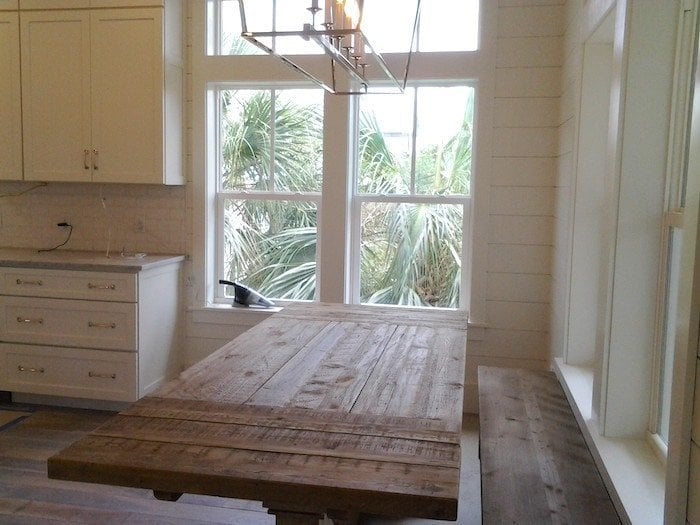
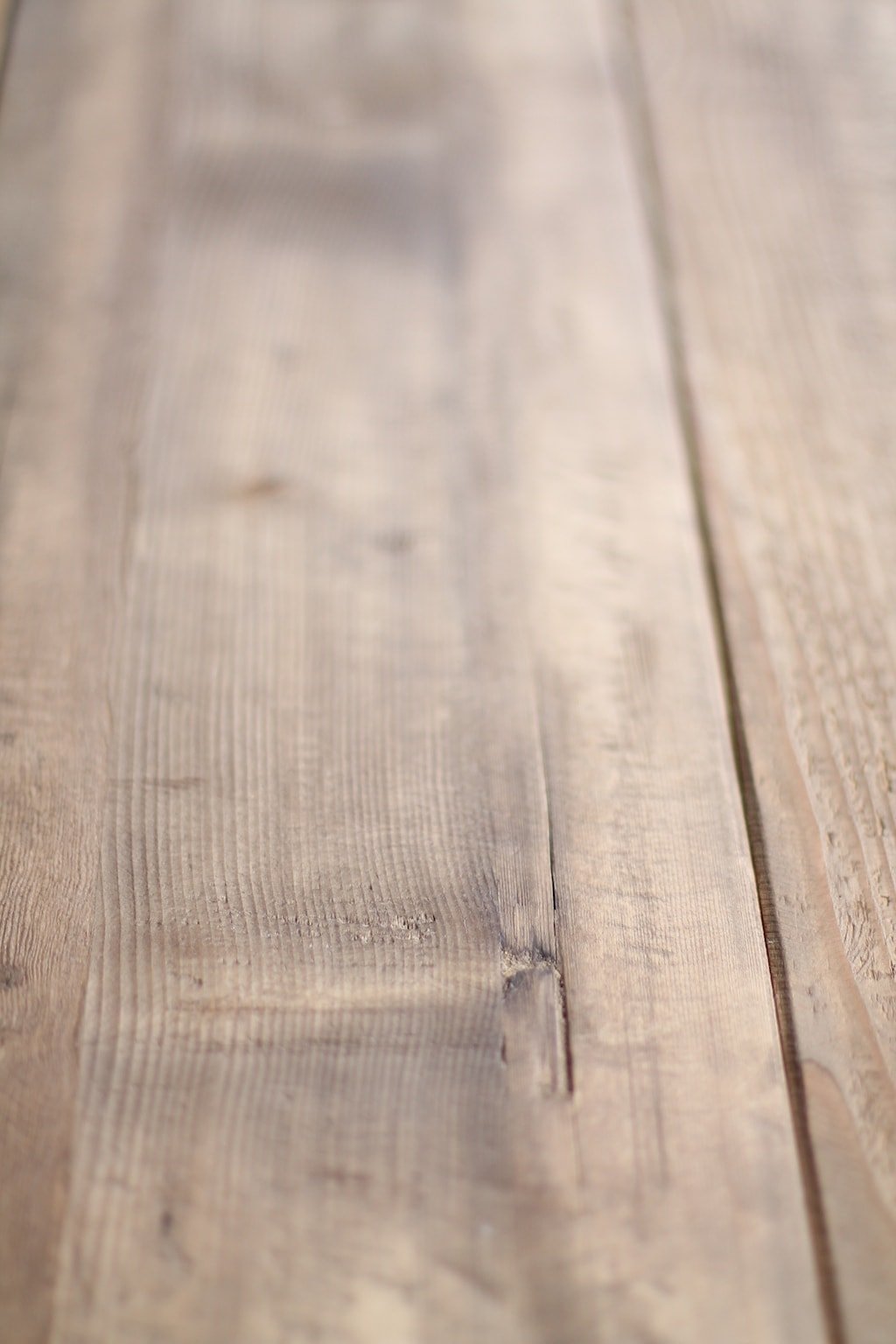
- If you plan to do anything with it, determine if you need to wipe the finish off first (if you’ve damaged it) or just go over the powder finish. The powder finish easily wipes off with a damp cloth. Below are pictures depicting the wood without the finish Restoration Hardware applies. Reader Lei said she used “coffee grounds and rubbed it into the spot where it had lightened”which made the omission of powder negligible.
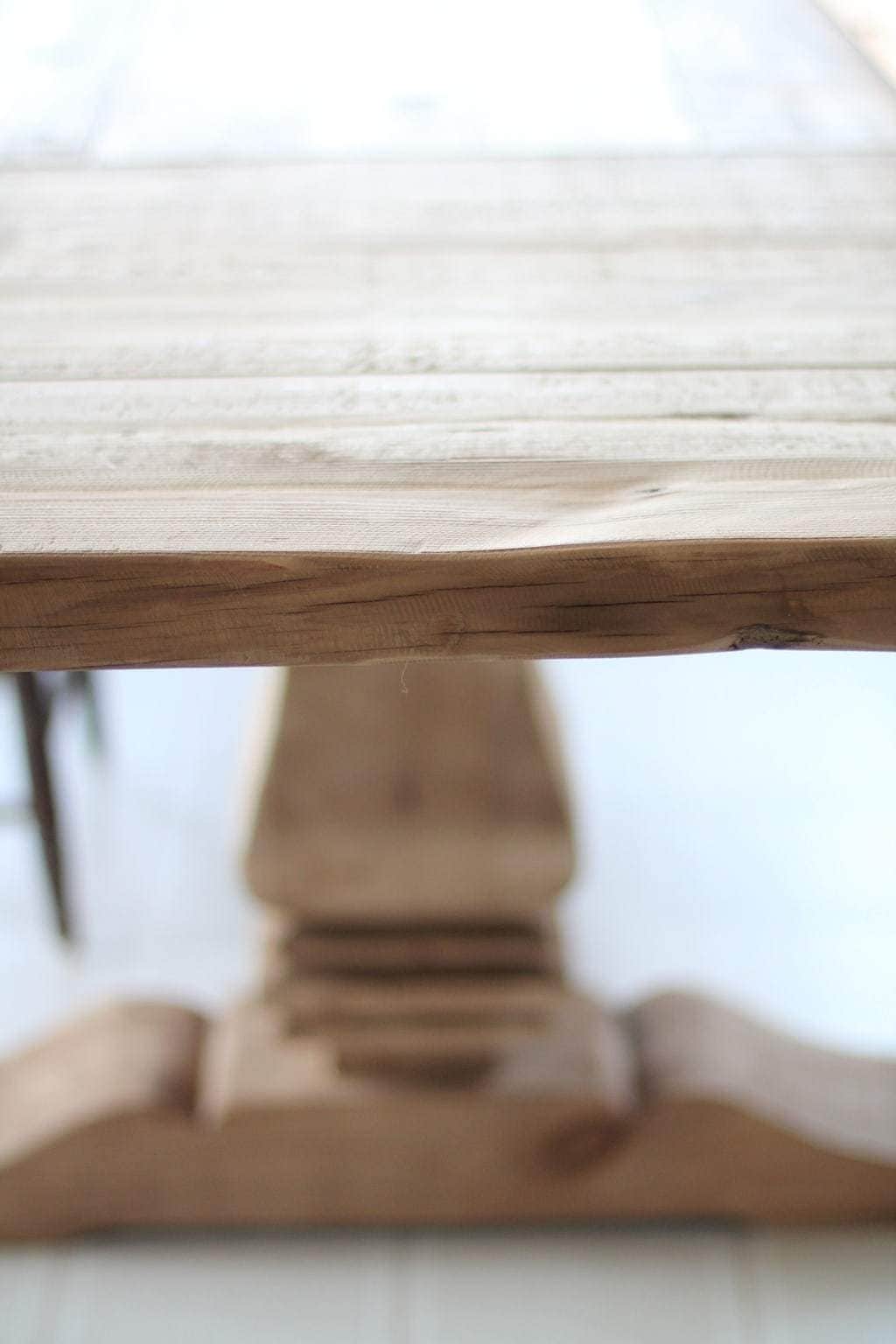
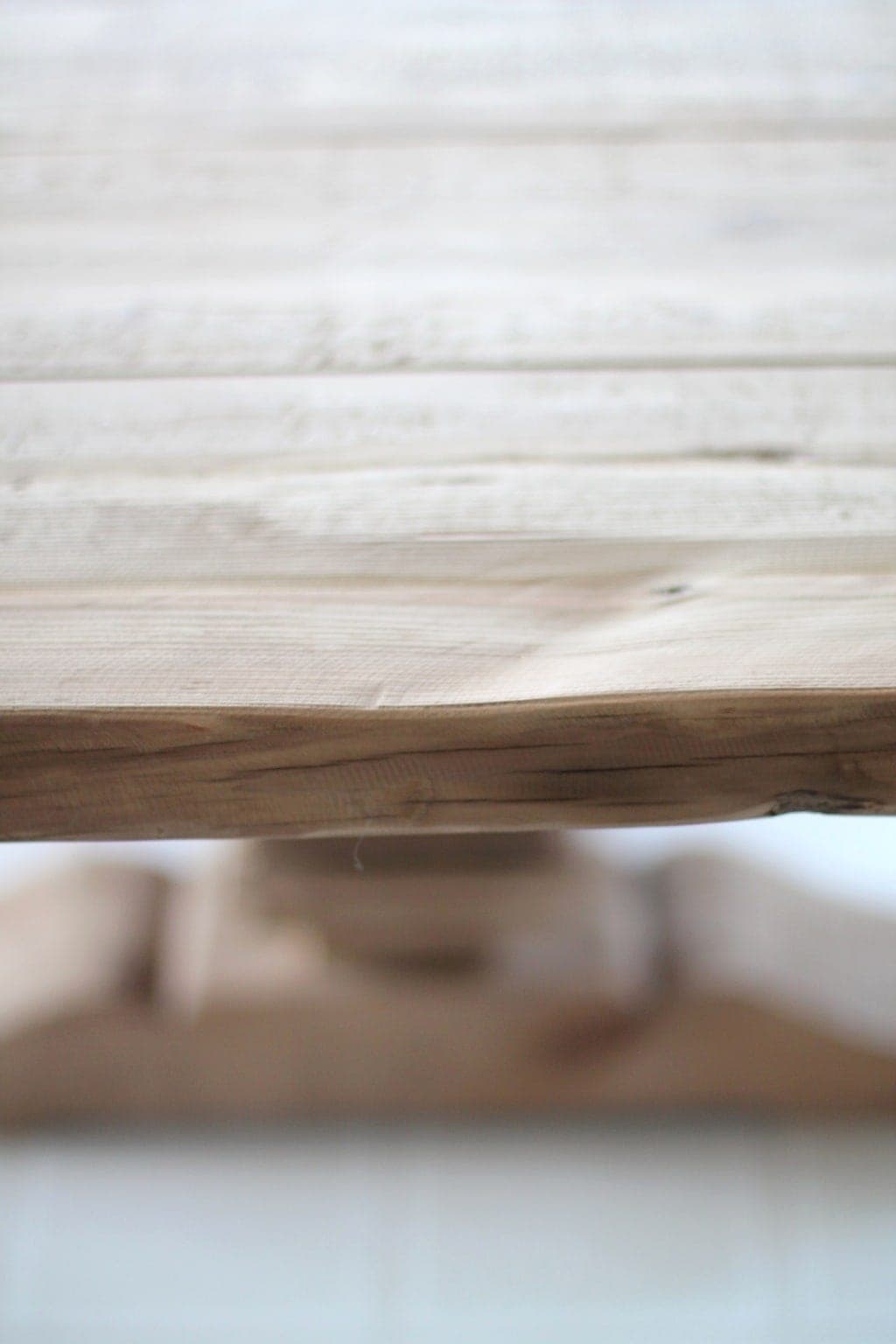
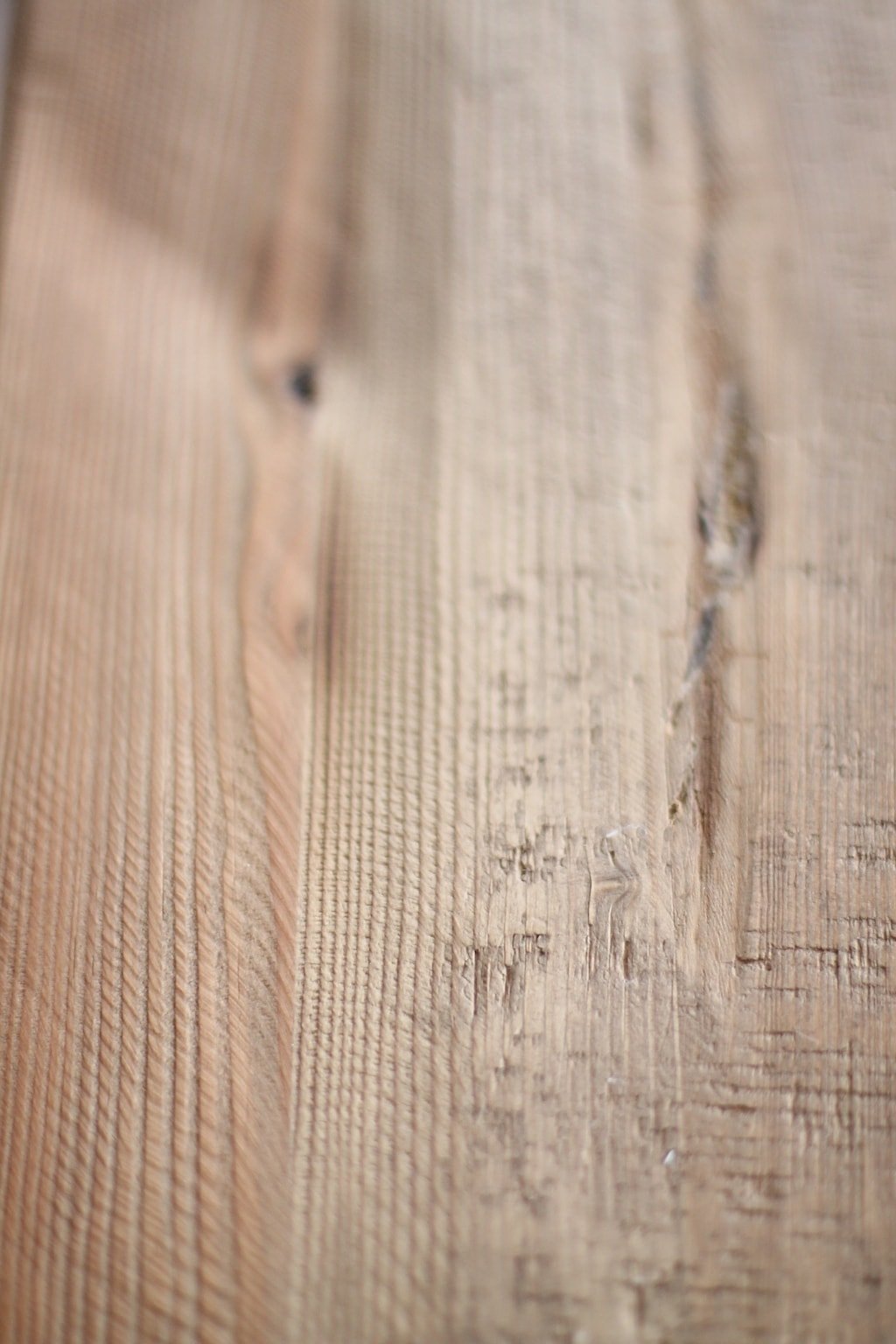
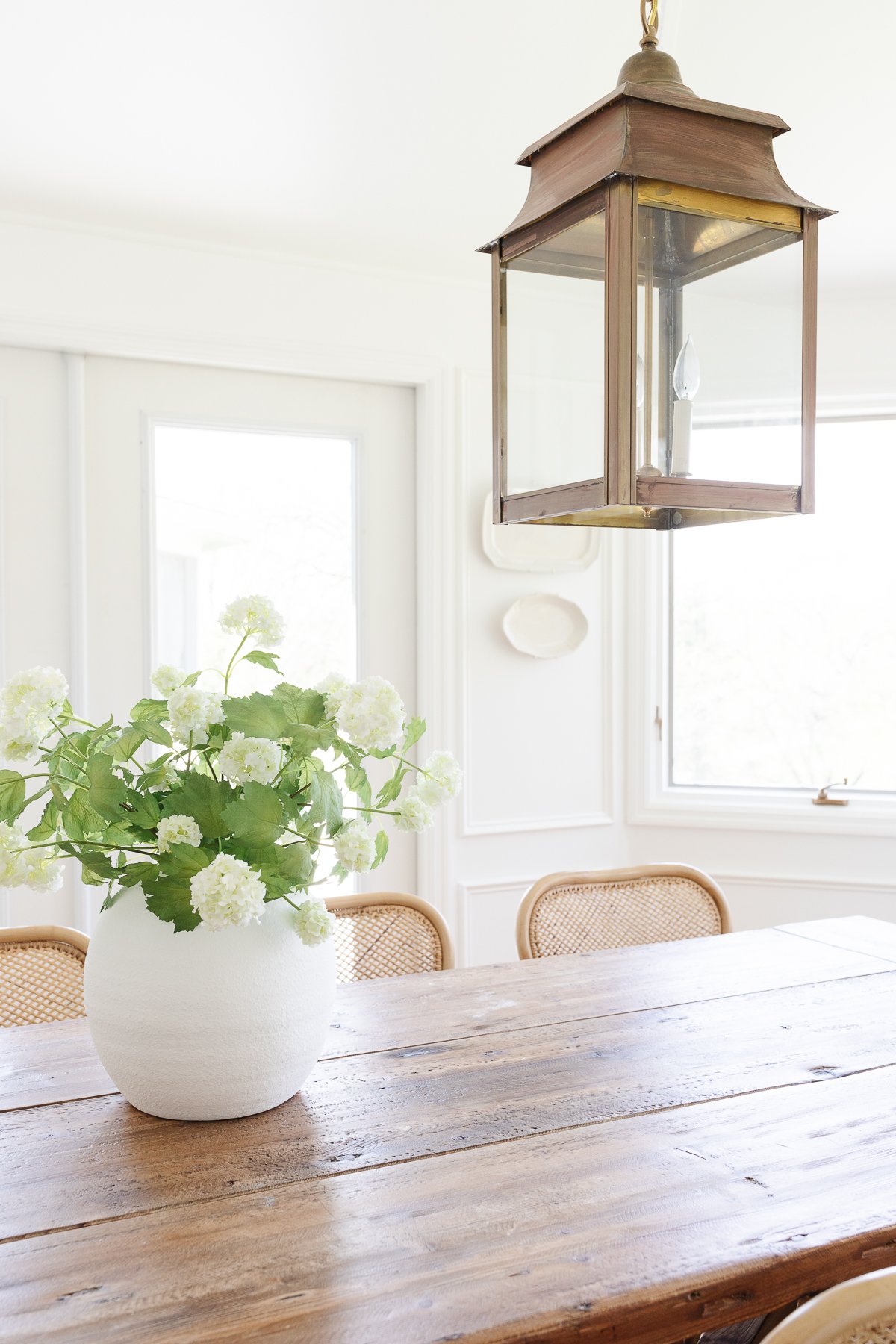
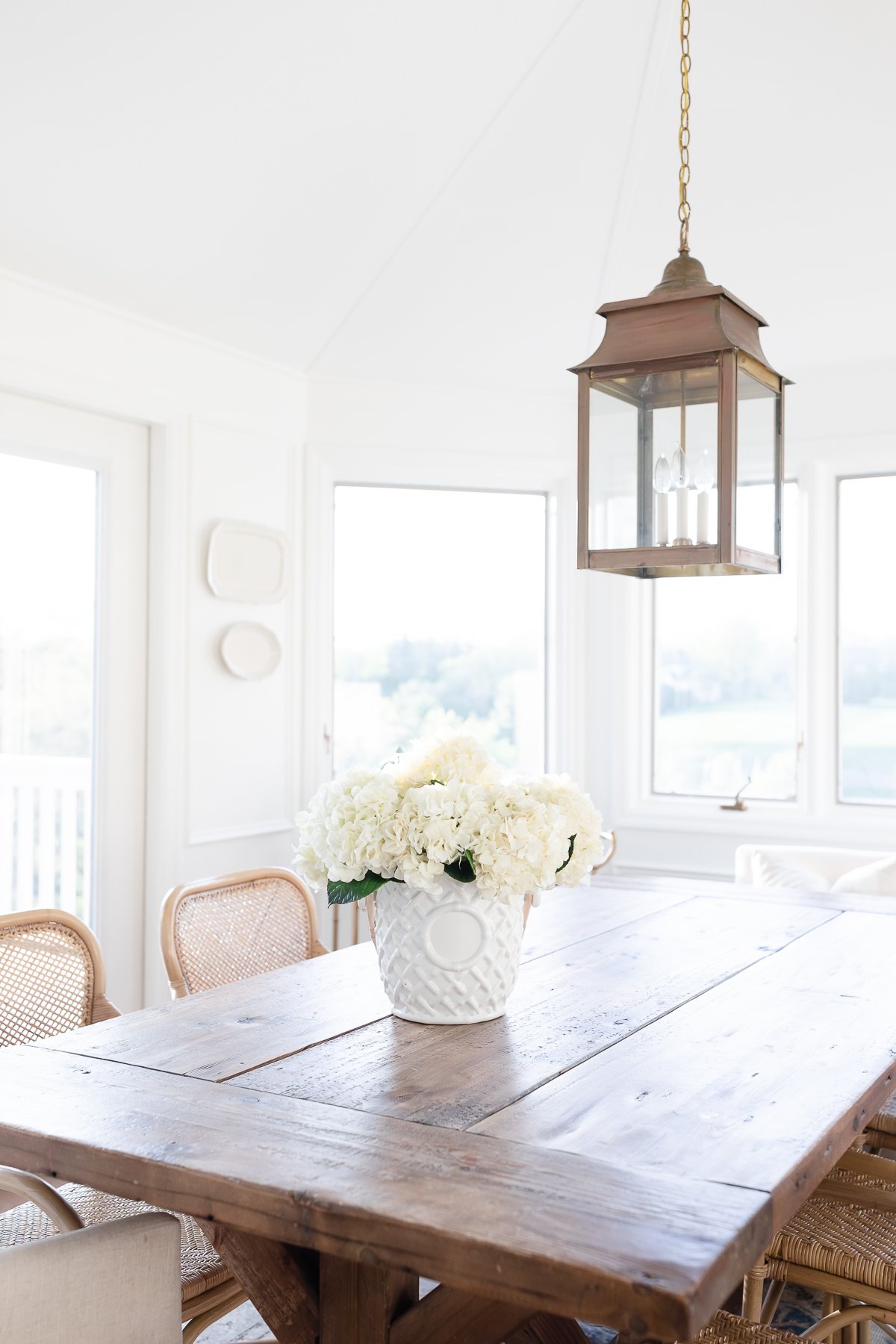
You can see the sheen from the tung oil in the picture below:
Tools and Supplies
- Pure Tung Oil
- Flour Sack Towels
- 0000 Super Fine Steel Wool
How to Use Tung Oil
- Apply Tung Oil with on with white flour sack towels.
- Have a second person follow behind to remove any excess.
- Use steel wool to dull the finish.
- Repeat.
The more muscle you put into using the steel wool the more natural your finish will be.
This method can be used with any farmhouse table or reclaimed wood table.
Update April 2019
Nearly five years later, I still receive a lot of questions about our Restoration Hardware dining table. The tung oil has held up incredibly well. To date, we have not reapplied and don’t see a need to do so.
The finish has continued to fade over time offering a softer, more natural aesthetic. All glue, marker and even candle wax have been removed effortlessly!
Update March 2024
Same story! We love our table and have never needed to change or alter the finish.
What Stain Color Best Matches Restoration Hardware’s Natural Finish?
If you have to stain your RH wood table because of a re-do, or are building your own farmhouse table to capture that look, Minwax Driftwood came the closest to the natural finish of the Restoration Hardware Dining Table.
It seeps into the pores of the wood, so the quicker you wipe it off to remove it, the less color that will be applied, however, it gets pretty dark in the grooves.
Here are some examples on various boards. I applied it and Chris followed behind wiping it off. These images are before the tung oil was applied.
In Conclusion
What did we learn?
Redefine expectations.
In the end, it’s not perfect, but it’s functional and looks nice. If you have experienced a similar situation, know that you will make peace with it, eventually!
I have learned so much from this table. One of the most important lessons is that sometimes we need to redefine our expectations.
It’s just a table.
Through all of your comments and emails, I learned that I am not alone. More importantly, I remembered that it’s just a table. Despite wasted time, money and energy, it’s still just a table.
It’s the reclaimed wood table that brought us together to help each other. If you have an experience with your table and can offer additional help to others, please leave a comment below. If this post can save someone even a few of the hours and frustration we put into our table, it’s worth it.
I hope this post has helped you make a decision you’re comfortable with to protect your farmhouse table. Please use comments below (rather than emailing) so that your questions and comments help others, too!







Hi, Julie, THanks for your help earlier with the table. I’m now in the midst of my own drama. I ordered a sample of the natural salvaged wood and did the tung oil thing just for my own eyes. Worked great. So I got the table. As the delivery man was leaving he leaned over the table and touched it with his sweaty hands while at the same time dropping one huge drop of sweat and a bunch of little ones!!! I told him I didn’t want to sign because I was worried he’d ruined it! He was like “Lady, it’s just sweat!”. But sure enough it left a permanent mark. (Who makes a table this delicate!! More crazy who buys it? LOL!) I freaked and called RH who said they’ll exchange it. I told them I was worried to have the table in my house because I was afraid if it got ruined so easily we’d do more damage. He said don’t worry, we’re exchanging it. So I decided to test the tung oil on the extension part. As I was doing it the towel was getting all brown like the dust was coming off on the towel. I’m not sure as I haven’t done the steel wool but did you experience your towel getting dark? I’m afraid I’m wiping off the magic powder and that it won’t look as good. I’m just wondering if that was your experience…Thanks and sorry for the bother again. I have to laugh though at my sweat story!!
That’s so frustrating. That’s normal. The table will definitely change, but it will be usable. You can see our table in a variety of posts like this one on Christmas arrangements for reference.
Hi – we have the RH salvaged natural farm house table and just applied 50/50 Tung oil and paint thinner and it is SO dark. I am afraid we totally ruined the table. Any recommendations for how to remove and start over? Or how to lighten it? Should we not have used so much thinner? We thought we read in earlier comments it was 50/50 mix.
Steel wool
Update on the GREY Reclaimed Oak table…
I applied 2 coats of the recommended 100% Tung Oil using the flour sack towels to the top of the table, a section at a time with wiping off the excess. I used 1 coat on the base. I used the steel wool between the coats lightly on this table, as I mentioned before it did leave some black marks on the sample wood taking off some of the finish on this particular table. I decided not to use it after the second coat and allowed the oil to dry overnight to see what it would look like on its own. The tung oil left a mild sheen to the grey oak only noticeable when the natural light hit it, but it did start to lighten by the next day and I’m going to see how it looks after awhile before doing the 3rd coat. It did not change the color of the wood at all. I took several pictures for all of you but I can’t figure out how to attach them in this comment section. Let me know how to get them here or I can email them to Julie. Overall I like the results and I just hope it prevents water rings and stains. Good luck!
Hi all, I just wanted to share that I bought an RH Reclaimed Russian Oak 60″ round table in GREY and I am going to use the 100% tung oil to protect it. I decided to go with this after testing it on the sample square I bought prior, and it did not change the color at all. However, using the 0000 super fine steel wool does leave minor fine scratches if you don’t go with the grain and be somewhat gentle, as this table is not completely unfinished as compared to some RH tables. It does have some finish to it. I am using tung oil to hopefully prevent water rings and stains with every day use. I do not have children, but I am a little of a clean freak. I love love my table and like all of you, don’t know if I can ’embrace’ the stains! I will send pictures before and after.
Thank you so much! I have read everything and get it now. I’m so excited to order it. I know this is a stupid question but if you or anyone has the time to answer, after at least putting on a coat of the Tung oil, is it say from destruction? I ask because I do not know if I can keep our small children with their sweet (Dirty) fingers away! They like to touch anything new. We have a very small home and I don’t think I could keep them away from the table for the entire process of letting it dry; steel wood etc. at least I’d have to come up with a smart game plan. Lol. Thanks
Yes. The steel wool merely dulls it down and additional coats just add additional protection.